
Florida Sea Turtle Lighting Laws
What Every Coastal Resident Needs to Know
Your lights can make the difference between life and death for a sea turtle hatchling.
Every year, thousands of sea turtles nest on Florida's beaches. When hatchlings emerge, they instinctively follow the natural light of the ocean horizon toward the water. Artificial lighting from homes, condominiums, hotels, businesses and streets can confuse them, drawing them away from the sea and into danger.
Florida has established regulations and guidelines to reduce the impact of artificial lighting on sea turtles. Many coastal counties and municipalities have also adopted their own lighting ordinances.
Whether you own a beachfront home, manage a condominium, operate a coastal business or live near the water, it's important to understand the rules that apply to your property.
Start here: Find the sea turtle lighting laws for your community.
Know the law where you live.
There is no single local lighting ordinance that applies uniformly to every Florida beach community. Requirements vary by county and municipality.
The Florida Fish and Wildlife Conservation Commission (FWC) maintains a statewide directory of local governments that have adopted sea turtle lighting ordinances.
FIND YOUR FLORIDA SEA TURTLE LIGHTING ORDINANCE – FWC DIRECTORY
The directory allows you to:
Look up your county or municipality.
See whether a lighting ordinance has been adopted.
Find the ordinance's adoption or update date, as listed by FWC.
Identify the applicable chapter and section of your local code.
Find local code enforcement contact information.
A few important things to remember:
If you live within an incorporated city or town, check its ordinance as well as the county's regulations.
If your community is not listed, contact your local government to ask what sea turtle lighting requirements apply.
The FWC directory is a starting point, not a substitute for checking the current local code. Ordinances and enforcement contacts can change.
Is your property turtle-friendly? A practical checklist.
Artificial lighting can come from many sources, including those that homeowners and property managers may not realize are affecting the beach.
Use this checklist to help identify potential problems.
Outdoor lighting
Turn off unnecessary exterior lights, especially those visible from the beach.
Replace conventional white bulbs with appropriate long-wavelength amber, orange or red LEDs.
Install fully shielded, downward-facing fixtures.
Keep fixtures as low and dim as practical.
Eliminate decorative uplighting, landscape lighting and string lights visible from the beach.
Use motion sensors and timers for lights needed for safety and security.
Check pool, deck, balcony, stairway, walkway and parking lot lighting.
Indoor lighting
Close curtains or blinds at night, particularly in rooms facing the beach.
Move lamps away from windows.
Turn off unnecessary interior lights.
Consider appropriate window tinting to reduce light escaping from the building.
Remember: Interior lighting can be just as disruptive as exterior lighting. Large windows, sliding glass doors and brightly illuminated rooms can create substantial light pollution on nesting beaches.
For additional guidance, see FWC's recommendations for reducing light pollution.
When do lighting restrictions apply?
Florida's sea turtle nesting season generally runs from March through October, but the exact dates and requirements governing beachfront lighting depend on your local ordinance.
Some communities impose restrictions throughout the year; others specify particular seasonal dates.
Don't assume that lighting is permissible simply because it is outside the typical nesting season. Check your local ordinance for the applicable dates, geographic boundaries and requirements.
What if you see lights shining onto the beach?
If you notice lighting that appears to violate local requirements, you can help by taking action.
Contact the property owner or manager. They may simply be unaware that their lighting is affecting sea turtles.
Report persistent problems. Contact your local code enforcement office or environmental protection department.
Use the FWC directory. Find the appropriate local enforcement contact through the statewide ordinance directory.
If you encounter an injured, stranded or disoriented sea turtle, contact the FWC Wildlife Alert Hotline at 1-888-404-3922. Do not handle nesting turtles or hatchlings.
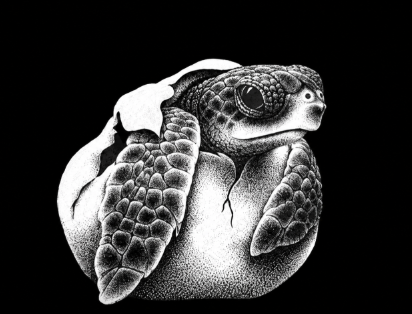
Understand the three golden rules of turtle-friendly lighting.
Florida FWC recommends three fundamental principles for lighting near sea turtle nesting beaches.
KEEP IT LOW
Mount fixtures as low as possible while still providing the light needed for safety. Use the lowest wattage and light output necessary. The lower the light, the less likely it is to be visible from the beach.
KEEP IT LONG
Use long-wavelength lighting, such as amber, orange or red LEDs, with wavelengths greater than 560 nanometers and no shorter wavelengths. Avoid conventional white lighting and multicolored lights.
KEEP IT SHIELDED
Use fully shielded fixtures that direct light downward and prevent the bulb or glowing lens from being visible from the beach.
All three principles matter. A red bulb alone does not make a fixture turtle-friendly if the light is too bright, improperly positioned or visible from the beach.
Learn more from FWC's official sea turtle lighting guidelines.
Additional official resources
Want to learn more or make sure your property meets the appropriate standards? These are the primary government resources for Florida sea turtle lighting protection.
Florida Fish and Wildlife Conservation Commission (FWC)
Florida Department of Environmental Protection (DEP)
This model ordinance provides guidance to local governments on regulations designed to protect nesting sea turtles and hatchlings.
Florida State Legislature
This statute establishes the state's framework for identifying sea turtle nesting areas and developing guidelines for local beachfront lighting regulations.
Every light matters. Every hatchling matters.
Sea turtles have survived for millions of years, but today their survival depends in part on the choices we make along our coastlines.
A few simple changes to outdoor and indoor lighting can help ensure that hatchlings find their way safely to the sea.
Know the rules. Turn off unnecessary lights. Help keep Florida's beaches dark.
This resource was developed by Flying Turtle Designs using publicly available information from the Florida Fish and Wildlife Conservation Commission, Florida Department of Environmental Protection and Florida Legislature. Local ordinances may change, and requirements differ among jurisdictions. Always consult your current local ordinance and local government for the regulations applicable to your property.